PhD Defense Announcement: Towards an Ecosystem for Visual Analytics Systems Authoring: Insights from the Urban Domain
Candidate: Gustavo Muller Moreira
Committee:
Dr. Fabio Miranda, Chair and Advisor
Dr. G. Elisabeta Marai
Dr. Michael Papka
Dr. Remco Chang, Tufts University
Dr. Ross Maciejewski, Arizona State University
Date/Time: Monday, October 12, 2026 at 12:00 PM CT
Location: CDRLC Arcade (850 W Taylor St, Building 649, Room 1219)
Abstract:
Many Visual Analytics (VA) tools have been developed, offering powerful means to iteratively explore complex data. Despite their growth, these tools are often tailored to specific domains and result from disjointed collaborations between domain and visualization experts, in which the former provide problems, and the latter provide solutions. The result is a collection of bespoke tools that lack traceability, reproducibility, and generalizability, and that limit domain expertise to problem proposition and requirements. This scenario now takes place under the light of recent AI developments. AI shortened the gap between problem and solution, allowing design decisions to co-occur with implementation and removing the cost-based guardrails that forced researchers to rely on domain expertise. Rigor is also affected, since less knowledge about the process is generated. At the same time, Large Language Models let researchers scale their prototypes, shifting attention toward research questions, problem-solving, and reflection.
The urban domain provides fertile ground for these ideas. Urban environments generate large amounts of heterogeneous data and gather stakeholders with distinct expertise and workflows, from planners to public health experts. This dissertation proposes an ecosystem of tools and theoretical frameworks that grow in complexity and integration, both technical and social, while keeping technique in the service of people. The Urban Toolkit (UTK) introduces a grammar-powered framework for urban data integration, drawing on the Chicago Data Portal, OpenStreetMap, NYC Open Data, and Analyze Boston. Curio adds a collaborative, dataflow-driven approach, with scenarios using OpenStreetMap and Google Street View. Urbanite proposes a framework for human-AI collaboration and declarative design, with scenarios using OpenStreetMap, OpenTopography, Project Sidewalk, and Flickr. Finally, Vitral zooms out to the design process itself, organizing scattered knowledge in a canvas for retrospective analysis powered by an AI pipeline, illustrated by three real design studies. Together, they equip domain experts with the means for accessible and rigorous analytics.
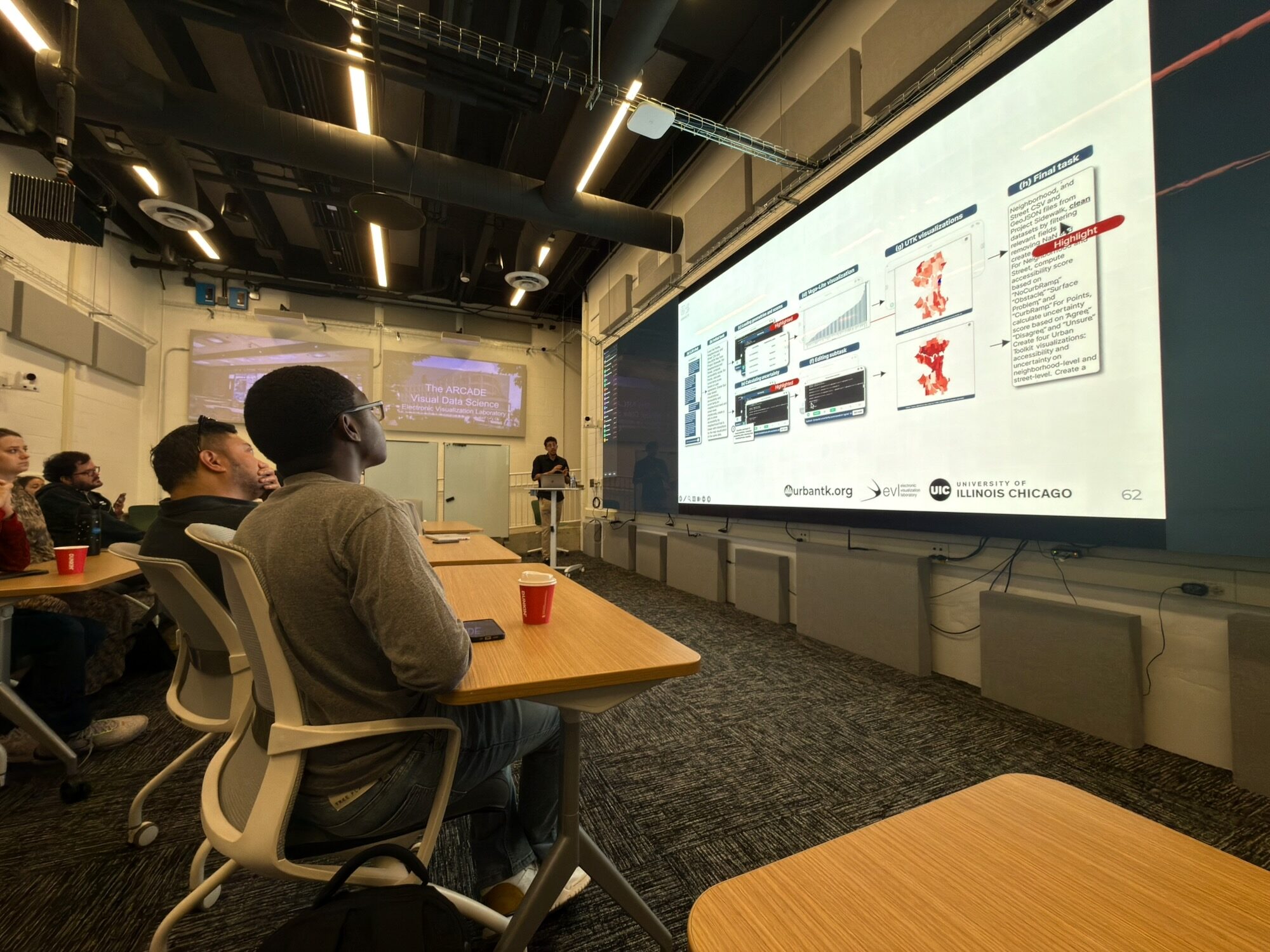
- Caption: Gustavo Moreira presenting an Urban Toolkit workflow on the Arcade display wall during his defense.
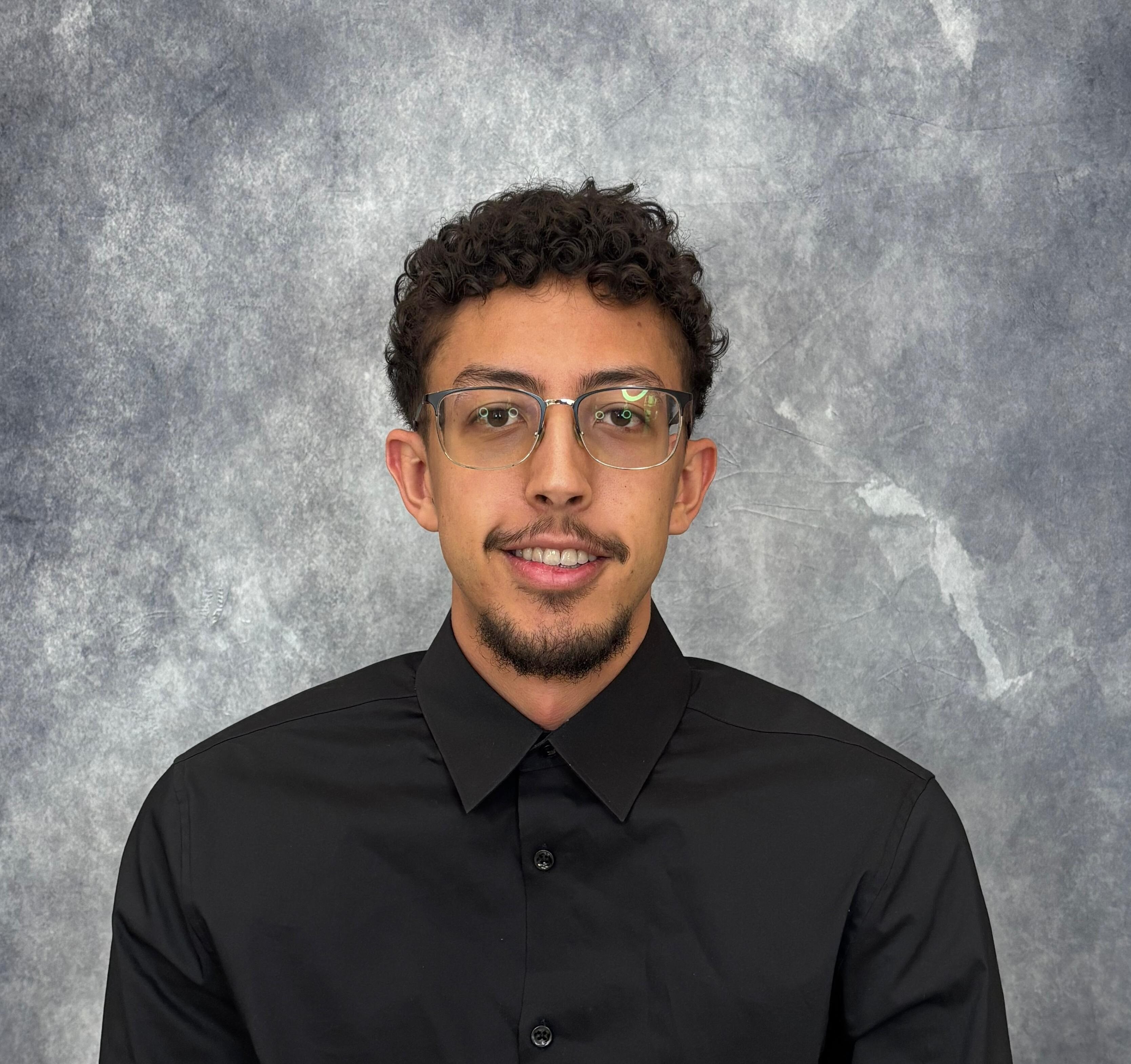
- Caption: Gustavo Muller Moreira.